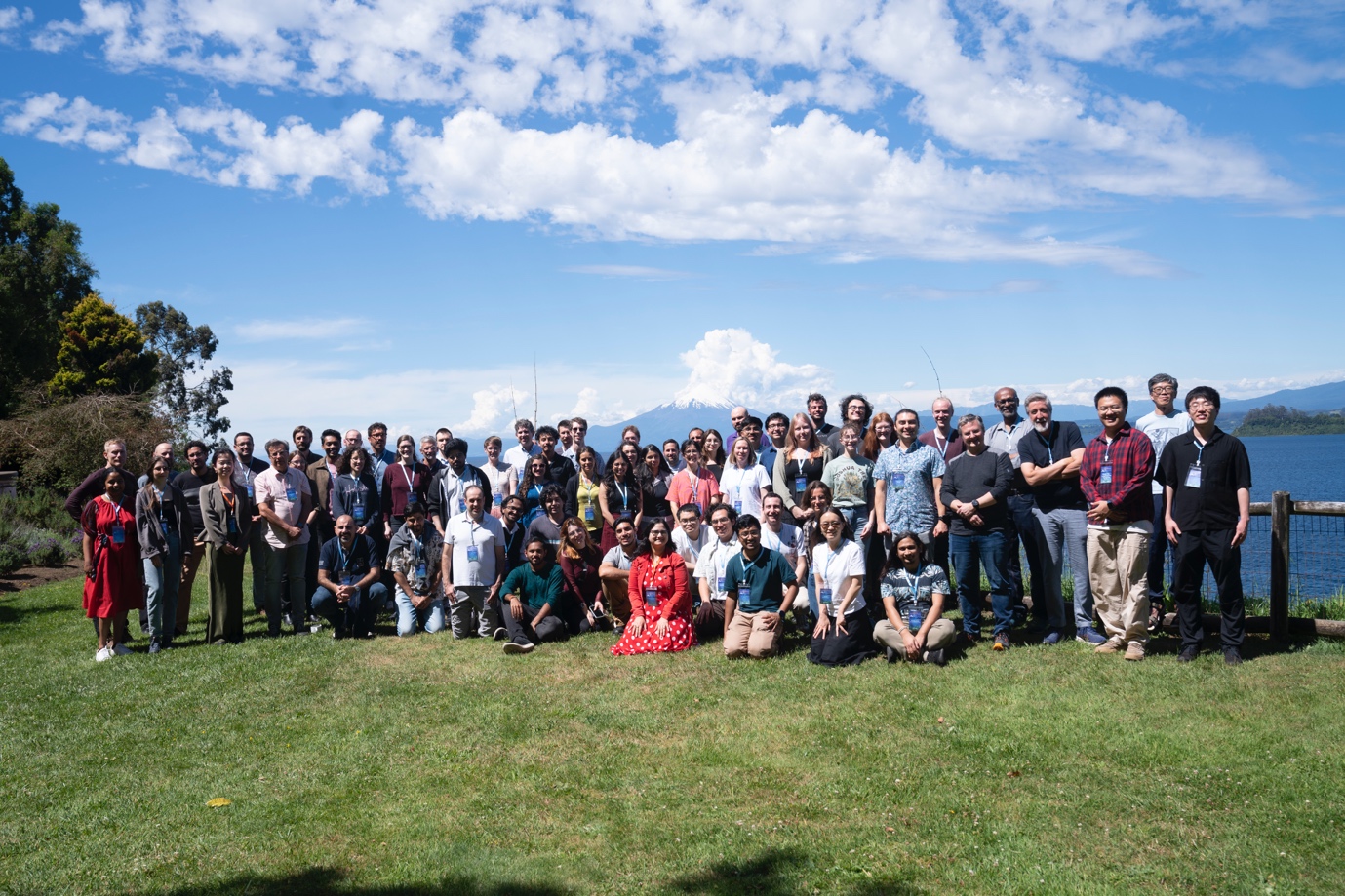
Astronomers gather in Chile to explore the baryon cycle from reionization to cosmic noon

The baryon cycle is a fundamental driver of galaxy formation and evolution, connecting star and black hole formation, feedback processes, and the exchange of gas between galaxies and their surrounding environments. It represents a key physical framework for understanding galaxy evolution and the large scale structure of the universe. With advances in multi wavelength observational facilities and continued progress in theoretical modeling and numerical simulations, studies of the baryon cycle are entering a new phase characterized by increased precision and more systematic approaches. To promote international exchange and collaboration in this field, the conference “ The Baryon Cycle from Reionization to Cosmic Noon” was held in Puerto Varas, Chile, from December 8 to 12, 2025. The meeting was hosted by the South American Center for Astronomy of the National Astronomical Observatories of the Chinese Academy of Sciences (CASSACA), and co organized by the French Chilean Laboratory for Astronomy (FCLA) and the Universidad de Chile. The conference attracted more than 90 astronomers, including over 70 participants from Chile, the United States, France, Germany, Italy, Spain, the United Kingdom, Japan, India, and Australia.
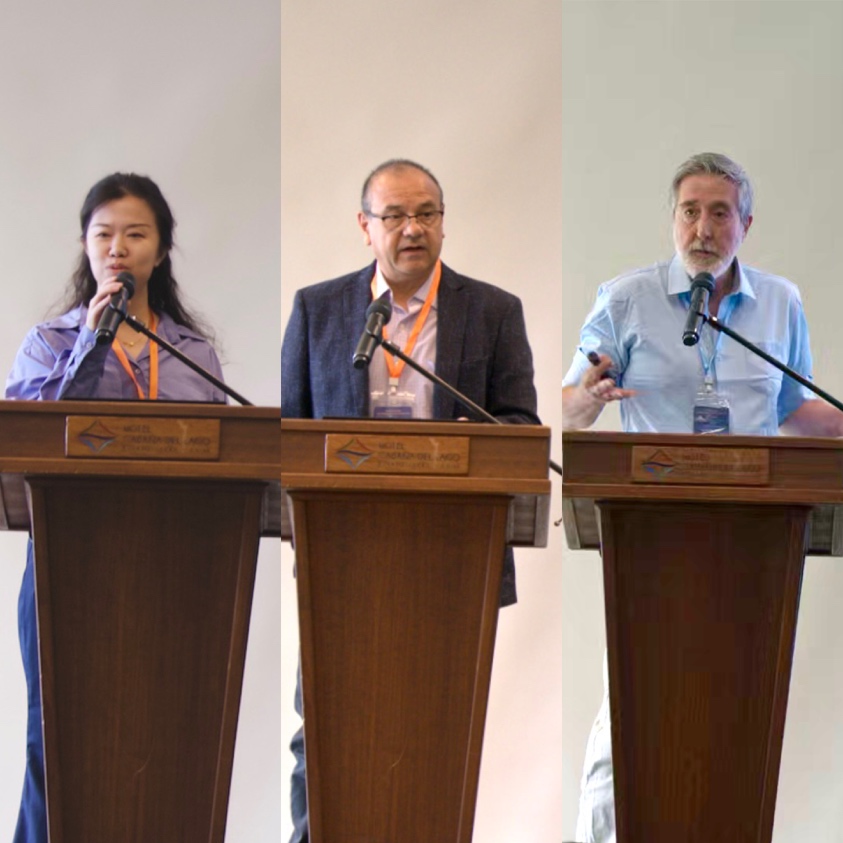
The conference was co chaired by Researcher Siwei Zou and Researcher Jiasheng Huang. At the opening ceremony, Researcher Siwei Zou and Professor Felipe Barrientos, Head of the Department of Astronomy at the Pontifical Catholic University of Chile and Director of the FCLA, delivered opening remarks. Professor Barrientos highlighted the role of CASSACA in advancing China Chile collaboration and training young researchers, and emphasized that the conference aimed to build an international platform integrating observations, theory, and numerical simulations of the baryon cycle.
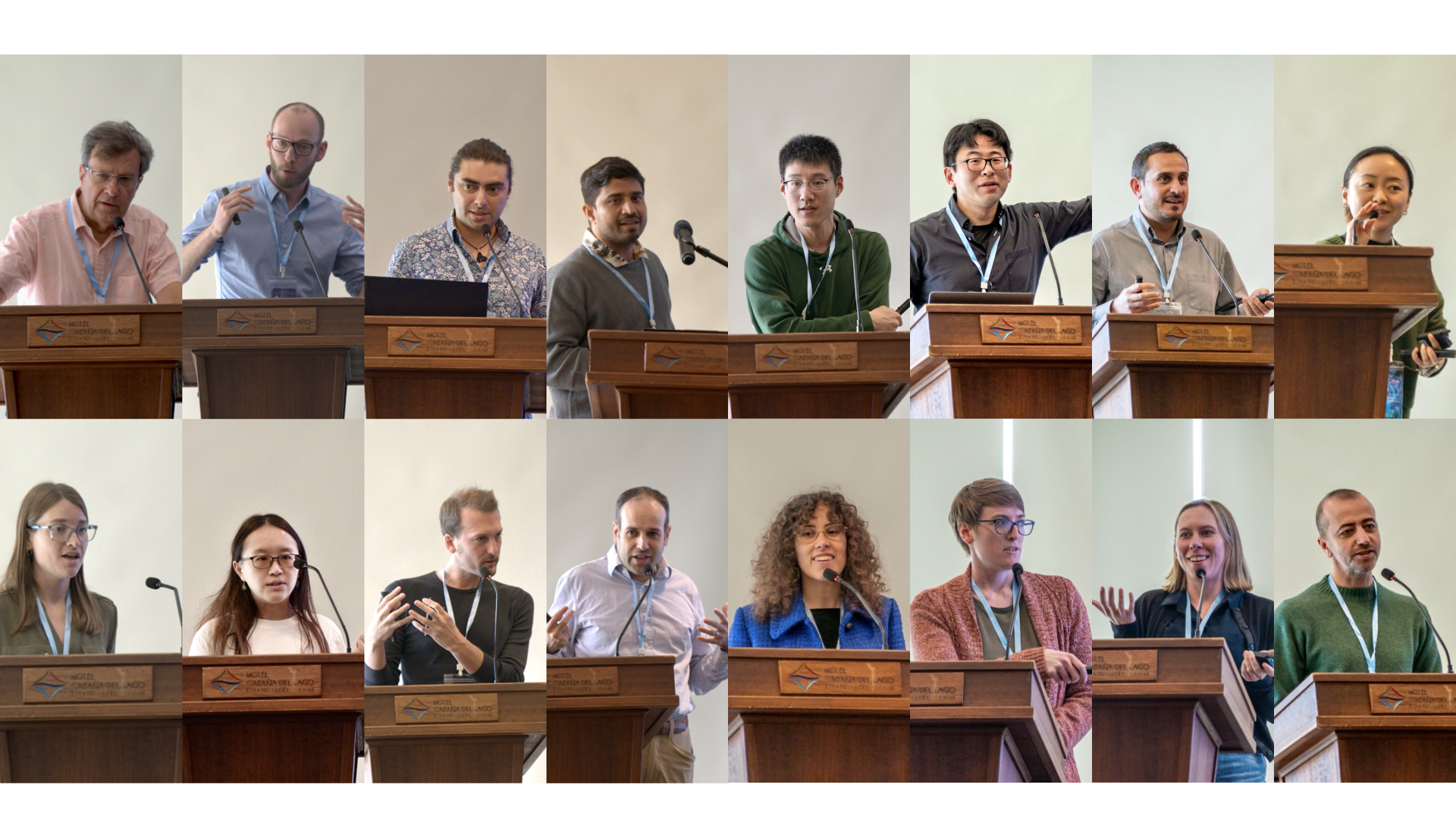
The program featured plenary review talks by leading international experts, covering observational and numerical studies of gas interactions with host galaxies and their environments at high redshift, applications of state of the art facilities including the ELT, frontier observations and theory of the first generation of stars and earliest galaxies, and the role of active galactic nuclei and so-called “little red dots” in galaxy formation and large scale structure evolution. These talks provided new perspectives on baryon circulation across multi-scales. Invited speakers included Professor Roland Bacon of the Centre de Recherche Astrophysique de Lyon and Principal Investigator of the VLT MUSE instrument, 4MOST instrument scientist Jens Kristian Krogager, Professor Rob Simcoe, Head of the Department of Astronomy at the Massachusetts Institute of Technology, Researcher Hakim Atek from the Institut d’Astrophysique de Paris, Professor Masami Ouchi and Researcher Enrico Garaldi from the University of Tokyo, Professor Jing Wang from Peking University, Professor Hui Li from Tsinghua University, Researchers Valentina D’Odorico, Fabio Vito, and Roberta Tripodi from the Italian National Institute for Astrophysics, Professor Nicolas Tejos from the Pontifical Catholic University of Valparaiso in Chile, Professor Claude André Faucher Giguère from Northwestern University, Professors Ralf Klessen and Dylan Nelson from Heidelberg University, Professor Sowgat Muzahid from the Inter University Centre for Astronomy and Astrophysics in India, Researcher Feige Wang from the University of Michigan, Researcher Grace Telford from Princeton University, Researchers Maren Cosen and Mandy Chen from the Carnegie Observatories, and Researcher Louise Welsh from Durham University.
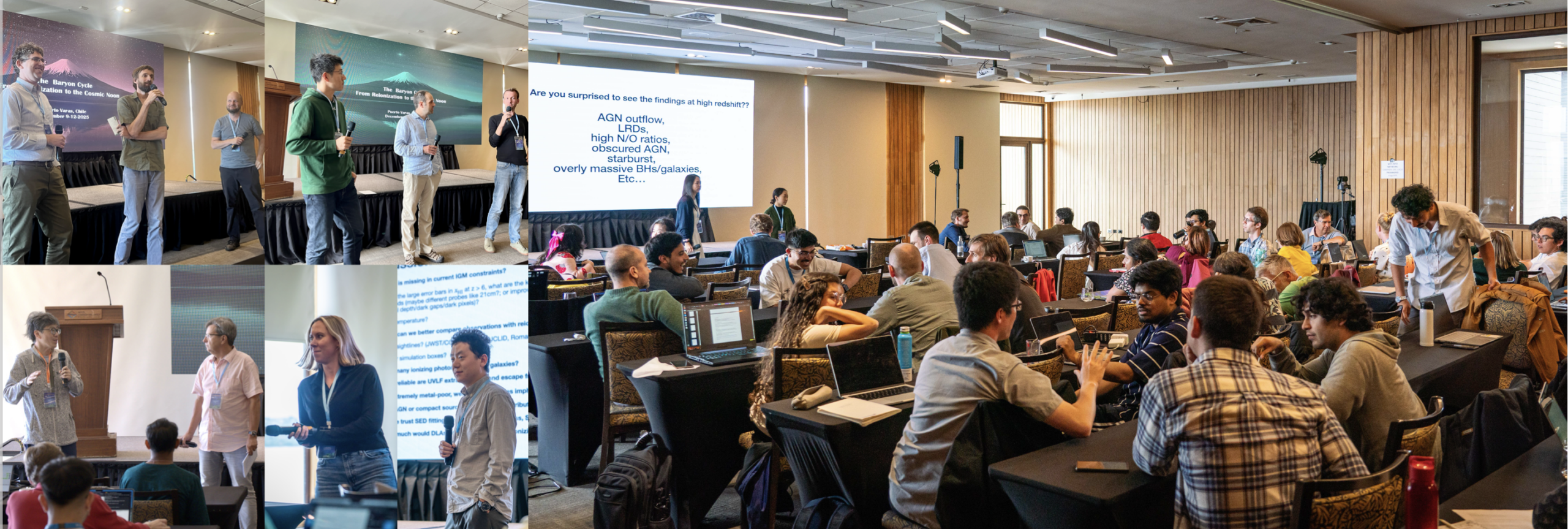
At the closing ceremony, Researcher Siwei Zou summarized the main outcomes of the discussions and thanked the organizers and participants. Professor Sebastian Lopez of the University of Chile praised the conference for presenting cutting edge results and fostering international exchange among early career researchers, and expressed the hope that it would develop into a recurring conference series alternately hosted by Chinese and Chilean scientists.

(Photography: Zheng Zhang, Joaquín A. Hernández-Guajardo, Kaixiang Wang)

First Announcement CCBC2026

(The meeting website is now live: https://www.ccbc2026.org/)

Dear colleagues of the China and Chile Astronomy Community,


We are very pleased and honored to invite you all to the 7th China-Chile Bilateral Conference for Astronomy. It will take place January 5-9th 2026 in Hong Kong. The science program is being jointly organized by the National Astronomical Observatories of the Chinese Academy of Sciences (NAOC) the Chinese Academy of Sciences South America Center for Astronomy (CASSACA), the Chilean Astronomical Society (SOCHIAS) and the Laboratory for Space Research (LSR) at The University of Hong Kong. The meeting is being hosted, locally organized and co-funded by CASSACA and the LSR. The conference aims to enhance and foster scientific collaboration in the field of astronomy between the two countries and to showcase the cutting-edge research achieved and world-class facilities available to the
shared community.


Established in 2013, CASSACA has facilitated ongoing cooperation and exchange activities between China and Chile. These activities have supported joint scientific research projects, postdoctoral initiatives, joint doctoral training programs, bilateral seminars, and more in theoretical research, observational astronomy, and equipment development, yielding significant outcomes.
This upcoming conference marks the 7th edition of the China-Chile Bilateral Conference for Astronomy, and it will be the first time it has ever been held in Hong Kong. The first bilateral conference was held in Santiago, Chile, in November 2011; the Second in Beijing, China, in August 2012; the third in Viña del Mar, Chile in 2013; the fourth in Guangzhou, China, in 2014; the 5th in Kunming, China, in 2019; the sixth in Puerto Varas, Chile, in 2023. The bilateral conferences will: (1) present the research and latest achievements by Chinese and Chilean astronomers; (2) update the China-Chile joint research projects; and (3) highlight the joint postdoctoral research.


Space is limited to 120 participants, so we recommend you indicate your interest as soon as possible and register early to guarantee a space. There is no registration fee for this conference, but formal registration is still required. Apart from the interesting science themes and some eminent invited speakers from both communities we will have a welcome reception on the Sunday evening on campus (with canapes, drinks and entertainment), a conference dinner on Wednesday (7th January) is included in the registration package for each participant. An evening Junk boat trip on Victoria Harbour is also planned.


Conference themes:

  • CC01: Star Formation (including late-stage stellar evolution)
  • CC02: ISM and Astrochemistry
  • CC03: Exoplanets and Astrobiology
  • CC04: Stars and Stellar Clusters
  • CC05: Galaxies, AGNs, Black holes, and Cosmology
  • CC06: Theoretical Astrophysics (Numerical simulations, AI/ML and Big data in Astronomy)
  • CC07: New facilities and Astronomical Instrumentation
  • CC08: Astronomy Public Outreach

Contact: Please e-mail the LOC via ccbc2026@hku.hk for any questions and queries (from 5th September 2025)

Gas and Dust Academic Symposium Successfully Held in Thailand


From December 10 to 15, 2024, the annual academic conference “Gas and Dust Ecosystems in Neighboring and Distant Galaxies” was successfully held in Chiang Mai, Thailand. This conference was co-hosted by the National Astronomical Observatories of the Chinese Academy of Sciences (NAOC), the South American Center for Astronomy of the Chinese Academy of Sciences, and the National Astronomical Research Institute of Thailand. It attracted more than 100 experts, young scholars, and students from over 30 astronomical research institutions, including the Chinese Academy of Sciences and domestic and international universities. The participants had in-depth exchanges and heated discussions on the latest advancements and future challenges in various frontier fields of astronomy.

At the opening ceremony, Researcher Dai Yu from the NAOC and Researcher Wiphu Rujopakarn from the National Astronomical Research Institute of Thailand delivered speeches to welcome participants from around the world. The conference featured eight thematic sessions over four days, including academic presentations and focused discussions on topics such as “Interactions between Active Galactic Nuclei (AGN) and Host Galaxies,” “AGN Accretion and Black Hole Growth over Cosmic Time,” “Galaxy and Star Formation in Cosmic Time,” “Ecosystems of Gas and Dust,” “Massive Galaxies and Quenching Processes,” “Connecting Simulations and Observations,” and “Galaxy Pairs, Proto-Clusters, and their Environments.” Participants shared their latest research findings, theoretical advancements, and discussed future directions.

The conference featured several renowned international astronomers as keynote speakers, including Professors Dimitra Rigopoulou and Roberto Maiolino from the University of Cambridge, Dr. Fengwu Sun from the Harvard-Smithsonian Center for Astrophysics, Dr. Mingyang Zhuang from the University of Illinois at Urbana-Champaign, Researcher Pablo Perez-Gonzalez from the Spanish Center for Astrobiology, Professor Haowei Yan from the University of Missouri, Dr. Yuri Nishimura from the University of Tokyo, Professor Zheng Cai from Tsinghua University, Researcher David Elbaz from the Saclay Nuclear Research Center, Professor Tao Wang from Nanjing University, Professor Feng Yuan from Fudan University, Professor Cheng Li from Tsinghua University, and Researcher Qi Guo from the NAOC. They delivered outstanding reports on cutting-edge topics, providing profound academic inspiration to the participants.

The conference concluded with a summary speech by Researcher Huang Jiasheng, Chief Scientist of the South American Center for Astronomy and NAOC. He highly praised the conference’s role in promoting international academic exchanges and collaboration and outlined the promising prospects of future astronomical research.

The successful convening of this academic conference not only provided a platform for global astronomers to exchange ideas and foster cooperation but also further promoted the integration and innovation of frontier astronomical research. As humanity continues to expand its understanding of the universe, studies on gas and dust will continue to unveil the mysteries of galaxy evolution, driving us toward deeper scientific exploration.

Researchers Discover Cosmic Dust Storms from a Type Ia supernova 

Cosmic dust—like dust on Earth—comprises groupings of molecules that have condensed and stuck together in a grain. But the exact nature of dust creation in the universe has long been a mystery. Now, however, an international team of astronomers from China, the United States, Chile, the United Kingdom, Spain, etc., has made a significant discovery by identifying a previously unknown source of dust in the universe: a Type Ia supernova interacting with gas from its surroundings. 

The study was published in Nature Astronomy on Feb. 9, and was led by Prof. WANG Lingzhi from the South America Center for Astronomy of the Chinese Academy of Sciences. 

Supernovae have been known to play a role in dust formation, and to date, dust formation has only been seen in core-collapse supernovae—the explosion of massive stars. Since core-collapse supernovae do not occur in elliptical galaxies, the nature of dust creation in such galaxies has remained elusive. These galaxies are not organized into a spiral pattern like our Milky Way but are giant swarms of stars. This study shows that thermonuclear Type Ia supernovae, the explosion of white dwarf stars in binary systems with another star, may account for a significant amount of dust in these galaxies. 

The researchers monitored a supernova, SN 2018evt, for over three years using space-based facilities like NASA’s Spitzer Space Telescope and NEOWISE missions, ground-based facilities like the Las Cumbres Observatory’s global network of telescopes, and other facilities in China, South America, and Australia. They found that the supernova was running into material previously cast off by one or both stars in the binary system before the white dwarf star exploded, and the supernova sent a shock wave into this pre-existing gas. 

During more than a thousand days of monitoring the supernova, the researchers noticed that its light began to dim precipitously in the optical wavelengths that our eyes can see and then started glowing brighter in infrared light. This was a telltale sign that dust was being created in the circumstellar gas after it cooled following the supernova shock wave passing through it.

“The origins of cosmic dust have long been a mystery. This study marks the first detection of a significant and rapid dust formation process in the thermonuclear supernova interacting with circumstellar gas,” said Prof. WANG, first author as well as the corresponding author of the study. 

The study estimated that a large amount of dust must have been created by this one supernova event—an amount equal to more than 1% of the Sun’s mass. As the supernova cools, the amount of dust created should increase, perhaps tenfold. While these dust factories are not as numerous or efficient as core-collapse supernovae, there may be enough of these thermonuclear supernovae interacting with their surroundings to be a significant or even dominant source of dust in elliptical galaxies. 

“This study offers insights into the contribution of thermonuclear supernovae to cosmic dust, and more such events may be expected to be found in the era of the James Webb Space Telescope (JWST),” said Prof. WANG Lifan from Texas A&M University, a co-first author of the study. The Webb telescope sees infrared light that is perfect for the detection of dust. 

“The creation of dust is just gas getting cold enough to condense,” said Prof. Andy Howell from Las Cumbres Observatory and the University of California Santa Barbara. Howell is the Principal Investigator of the Global Supernova Project whose data was used in the study. “One day that dust will condense into planetesimals and, ultimately, planets. This is creation starting anew in the wake of stellar death. It is exciting to understand another link in the circle of life and death in the universe.”

Fig. 1, Schematic sketches of SN 2018evt at the different phases a, b, and c. The artwork at the top right presents the dust formation process.  

This paper can be accessed at https://www.nature.com/articles/s41550-024-02197-9

Fig. 2: Temporal evolution of the mass of the newly-formed dust in SNIa-CSM 2018evt with different compositions, together with the dust masses estimated for core-collapse supernovae.  The black line presents the power law fit to the mass of the newly formed dust of SN 2018evt for 0.3 um graphite grains.

Researchers Make Significant Progress in Characterizing Exoplanet Atmospheres Using 4-meter Ground-based Telescope

Recent Progress: Researchers Characterize Exoplanet Atmospheres Using a 4-meter Ground-based Telescope and Achieve Significant Advancements

In recent times, researchers from the National Astronomical Observatory utilized a 4-meter aperture ground-based telescope located in Chile to obtain optical wavelength transmission spectra of two hot Jupiters, namely WASP-69b and WASP-121b. Through model analysis, they were able to provide important constraints on the atmospheric properties of these planets. The research findings were published in the Monthly Notices of the Royal Astronomical Society and Astronomy and Astrophysics Research, respectively.

Hot Jupiters are a type of extreme exoplanets that orbit very close to their host stars, with orbital periods generally less than 10 days. Due to long-term and intense stellar radiation, the dayside temperature of these planets typically exceeds 1000K. As a result, their atmospheres are relatively inflated, exhibiting strong spectral signals, making them one of the most important targets for atmospheric studies. Transmission spectra are crucial data used to investigate exoplanet atmospheres. They represent the difference between the spectra during planetary transits and the out-of-transit spectra, carrying information about the temperature structure and chemical composition of the planetary atmospheres. Therefore, transmission spectra can be utilized to characterize the atmospheric properties of these planets.

WASP-69b has a radius of 1.057±0.047 RJup, a mass of 0.260±0.017 MJup, and an orbital period of approximately 3.868 days. In the transmission spectrum, the researchers, including authors Ouyang Qinglin and Wang Wei, observed a slope caused by Rayleigh scattering, inferring that the atmosphere of this planet is primarily composed of hydrogen. Additionally, the transmission spectrum of WASP-69b exhibits significant oscillation signals in the range of 700-900 nm. Combining atmospheric models, the authors suggest that this may be attributed to titanium oxide absorption. Titanium oxide is commonly considered as the main component responsible for generating temperature inversions in hot Jupiter atmospheres. However, its presence has previously only been detected in the atmospheres of ultra-hot Jupiters (Teq > 2000K), as maintaining a gaseous state for titanium oxide requires sufficiently high temperatures (> 1500K). Thus, this is the first evidence of titanium oxide’s existence in a classical hot Jupiter.

Figure 1: Transmission spectrum of WASP-69b and the corresponding best-fit inversion models. The blue and red lines represent the best-fit inversion models for optical transmission spectrum and combined optical + near-infrared transmission spectrum, respectively. The lower panels show the posterior distributions of the parameters for the two inversion models. Both inversion models exhibit relatively high metallicity.

WASP-121b has a radius of 1.865±0.065 RJup, a mass of 1.183±0.064 MJup, and an orbital period of approximately 1.275 days. The authors found that the transmission spectrum they obtained differs from previous spectra, and there are also significant differences among the spectra obtained by different researchers. Through literature research and reanalysis of previous data, they believe that these differences are likely to be real and unlikely to be attributed to data processing procedures or stellar activity. In other words, the atmospheric composition of this planet may vary over time. Inversion analysis reveals the presence of absorption signals from titanium oxide and vanadium oxide in the atmosphere of WASP-121b. However, the abundances of these components are inconsistent with previous results, further supporting the possibility of temporal variations in the atmosphere of this planet.

Figure 2: Similar to Figure 1, the transmission spectrum of WASP-121b and the corresponding best-fit inversion models are shown. The lower panels display clear posterior distributions of the inversion parameters, depicting the posterior distributions of titanium oxide and vanadium oxide abundances, corresponding to the absorption of these components in the atmosphere.

Both studies represent the first observational research on exoplanet atmospheres using the SOAR telescope. The SOAR telescope, whose full name is Southern Astrophysical Research Telescope, is operated jointly by astronomical institutions from Brazil, Chile, and the United States. The relevant observational data were obtained through the application of the lead author, Wang Wei, during their tenure at the South American Astronomical Observatory of the Chinese Academy of Sciences. The authors of the studies point out that, compared to the current mainstream large-aperture ground-based telescopes and space telescopes, 4-meter telescopes such as SOAR have slightly lower precision. However, they can still provide important constraints on the atmospheric properties of exoplanets. Therefore, 4-meter ground-based telescopes like SOAR can be a cost-effective yet reliable option for studying exoplanet atmospheres, facilitating future research on a larger sample of planetary atmospheres.

Figure 3: The SOAR telescope located in Chile, with an aperture of 4.1 meters.

Paper 1 link: https://academic.oup.com/mnras/article/521/4/5860/7091929

Paper 2 link: https://doi.org/10.1088/1674-4527/accbb2

First Announcement CCBC2026

(The meeting website is now live: https://www.ccbc2026.org/)

Dear colleagues of the China and Chile Astronomy Community,


We are very pleased and honored to invite you all to the 7th China-Chile Bilateral Conference for Astronomy. It will take place January 5-9th 2026 in Hong Kong. The science program is being jointly organized by the National Astronomical Observatories of the Chinese Academy of Sciences (NAOC) the Chinese Academy of Sciences South America Center for Astronomy (CASSACA), the Chilean Astronomical Society (SOCHIAS) and the Laboratory for Space Research (LSR) at The University of Hong Kong. The meeting is being hosted, locally organized and co-funded by CASSACA and the LSR. The conference aims to enhance and foster scientific collaboration in the field of astronomy between the two countries and to showcase the cutting-edge research achieved and world-class facilities available to the
shared community.


Established in 2013, CASSACA has facilitated ongoing cooperation and exchange activities between China and Chile. These activities have supported joint scientific research projects, postdoctoral initiatives, joint doctoral training programs, bilateral seminars, and more in theoretical research, observational astronomy, and equipment development, yielding significant outcomes.
This upcoming conference marks the 7th edition of the China-Chile Bilateral Conference for Astronomy, and it will be the first time it has ever been held in Hong Kong. The first bilateral conference was held in Santiago, Chile, in November 2011; the Second in Beijing, China, in August 2012; the third in Viña del Mar, Chile in 2013; the fourth in Guangzhou, China, in 2014; the 5th in Kunming, China, in 2019; the sixth in Puerto Varas, Chile, in 2023. The bilateral conferences will: (1) present the research and latest achievements by Chinese and Chilean astronomers; (2) update the China-Chile joint research projects; and (3) highlight the joint postdoctoral research.


Space is limited to 120 participants, so we recommend you indicate your interest as soon as possible and register early to guarantee a space. There is no registration fee for this conference, but formal registration is still required. Apart from the interesting science themes and some eminent invited speakers from both communities we will have a welcome reception on the Sunday evening on campus (with canapes, drinks and entertainment), a conference dinner on Wednesday (7th January) is included in the registration package for each participant. An evening Junk boat trip on Victoria Harbour is also planned.


Conference themes:

  • CC01: Star Formation (including late-stage stellar evolution)
  • CC02: ISM and Astrochemistry
  • CC03: Exoplanets and Astrobiology
  • CC04: Stars and Stellar Clusters
  • CC05: Galaxies, AGNs, Black holes, and Cosmology
  • CC06: Theoretical Astrophysics (Numerical simulations, AI/ML and Big data in Astronomy)
  • CC07: New facilities and Astronomical Instrumentation
  • CC08: Astronomy Public Outreach

Results of the China-Chile Joint Research Project (CCJRF) 2023

The China-Chile Joint Research Fund (CCJRF) has been implemented since 2015 based on the principles established in a 2013 Memorandum of Understanding (MoU) between the Chinese Academy of Sciences (CAS) and the National Commission of Scientific and Technological Research of the Republic of Chile (CONICYT), and the more specific guidelines described in the Agreement (pdf link) between the National Astronomical Observatories of China (NAOC), the Chinese Astronomical Society, the Chilean Astronomical Society (SOCHIAS) and CONICYT to support proposals that involve collaboration in astronomical research from both Chinese and Chilean astronomy communities.

The call for China-Chile Joint Research Project (CCJRF) 2023 was issued on December 29, 2023, and 15 proposals were received by the deadline of March 29, 2024. The Joint China-Chile Committee (JCCC) is in charge of the review procedure of these proposals. Two senior astronomers from the Chinese side and another two from the Chilean side were determined for each proposal as the reviewers. After receiving the evaluations from the reviews, the JCCC had a final review meeting on July 4, 2024 and selected four recommended proposals and the corresponding amounts of financial support. Now the NAOC has approved these four to-be-funded projects:

  • CCJRF2315: A joint study on the feasibility to probe magnetic fields using near-IR Polarimetry, PI: 杨海峰Haifeng Yang (Zhejiang University)/Laura M. Pérez (Universidad de Chile)
  • CCJRF2310: A NIR Spectroscopic Survey of Nearby Bright AGNs: Measuring Broad-line Region Kinematics, Black Hole Masses and Geometric Cosmic Distances, Mary Loli Martínez-Aldama (Universidad de Concepción)/李彦荣Yan-Rong Li (Institution of High Energy Physics, CAS)
  • CCJRF2301: The Rowdy Planet Nursery: probing the earliest stage of planet formation through the star-planet interaction, 郭震Zhen Guo (Universidad de Valparaíso)/王雪凇 Xuesong Wang (Tsinghua University)
  • CCJRF2312: A Panoptic View of Massive Star Formation Across Galactic Environments, Pablo García (NAOC/CASSACA)/Amelia Stutz (Universidad de Concepción)